What you should know about aluminium cables — from bauxite ore to the symbols printed on the sheath.
01
How aluminium conductors are made
Aluminium makes up 8.23% of the Earth's crust by mass, yet it almost never occurs as pure metal. The primary source is bauxite — a reddish sedimentary rock (from its iron-oxide content), with major reserves in Australia, Brazil, China, Guinea and India.
Through the Bayer process, bauxite is refined into aluminium oxide: it is heated and pressurised with sodium hydroxide. Smelting follows, where carbon-based reducing agents strip away the oxygen — the result is roughly 99.8% pure aluminium, cast into ingots.
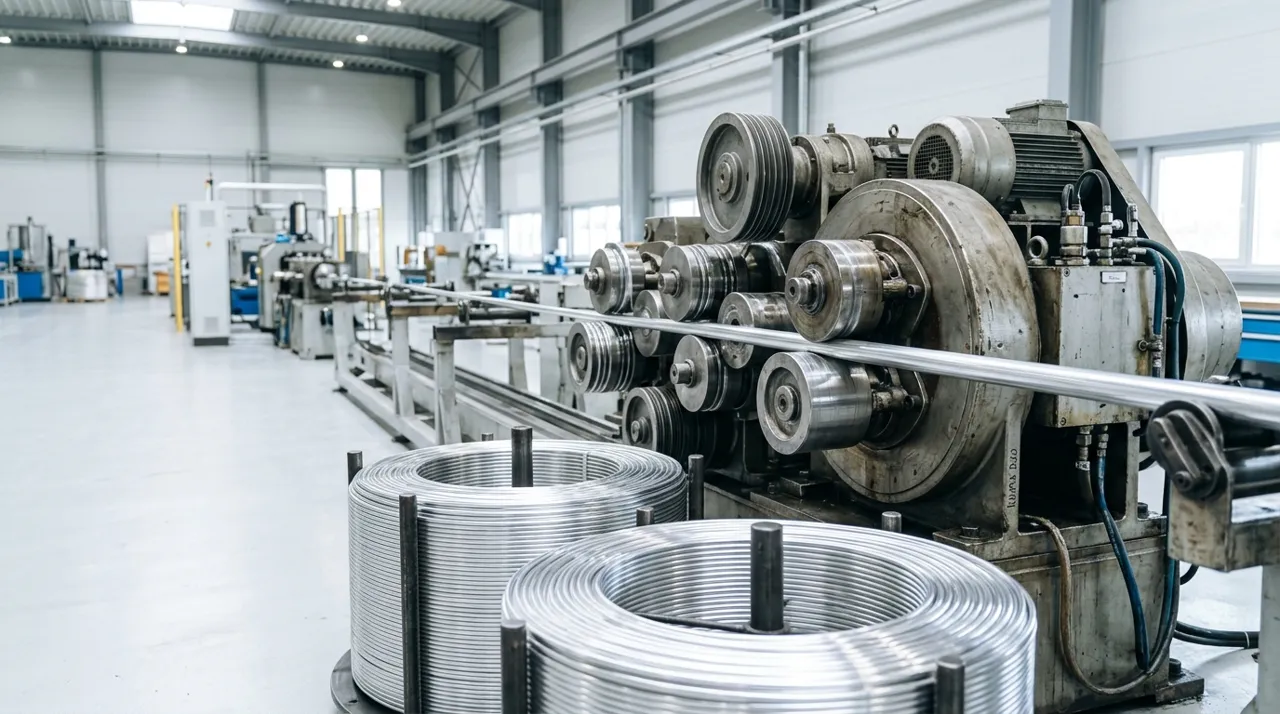
Ingots become conductors through wire drawing: the metal is pulled through dies that incrementally reduce its diameter while increasing its length, down to thin, flexible wire suitable for electrical cables.
Aluminium conductors are lighter than their copper counterparts but need a cross-section roughly one-third larger for the same current-carrying capacity. Aluminium wire armour (AWA) adds mechanical protection on single-core cables, preventing dangerous induced currents — ideal for overhead lines and theft-prone installations such as railways.
02
Why aluminium, not copper, in overhead lines
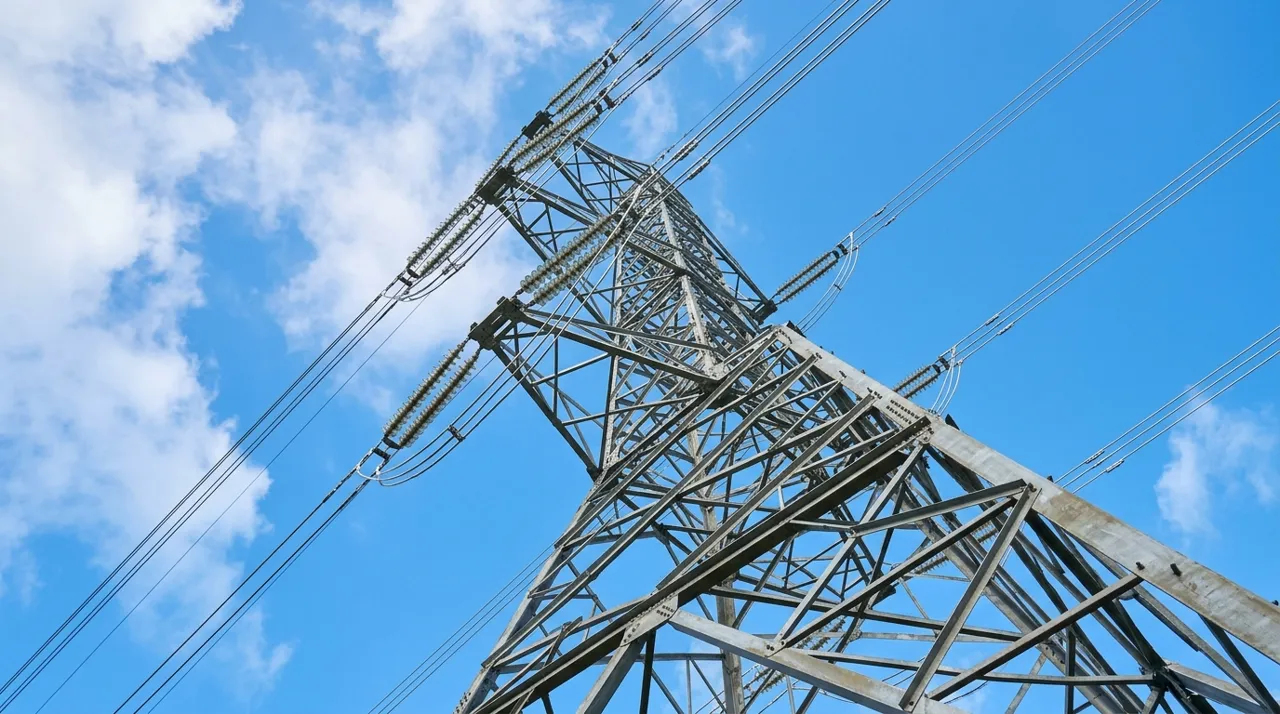
Weight and thermal behaviour: aluminium weighs only one-third as much as copper while keeping two-thirds of its conductivity. For suspended cables the low weight is decisive — and aluminium handles the expansion and contraction caused by temperature swings better.
Corrosion resistance: outdoors, aluminium naturally forms a dense oxide film that protects it against rust and moisture. Copper, by contrast, develops a patina over time that degrades current transmission — unsuitable for bare outdoor use.
The economics: aluminium prices are half or less of copper's, which approaches $10,000 per tonne. At the enormous quantities global overhead infrastructure demands, aluminium is the rational choice.
These three arguments — weight efficiency, natural weather protection and cost — make aluminium the preferred material worldwide for overhead power transmission.
03
The benefits of XLPE insulation
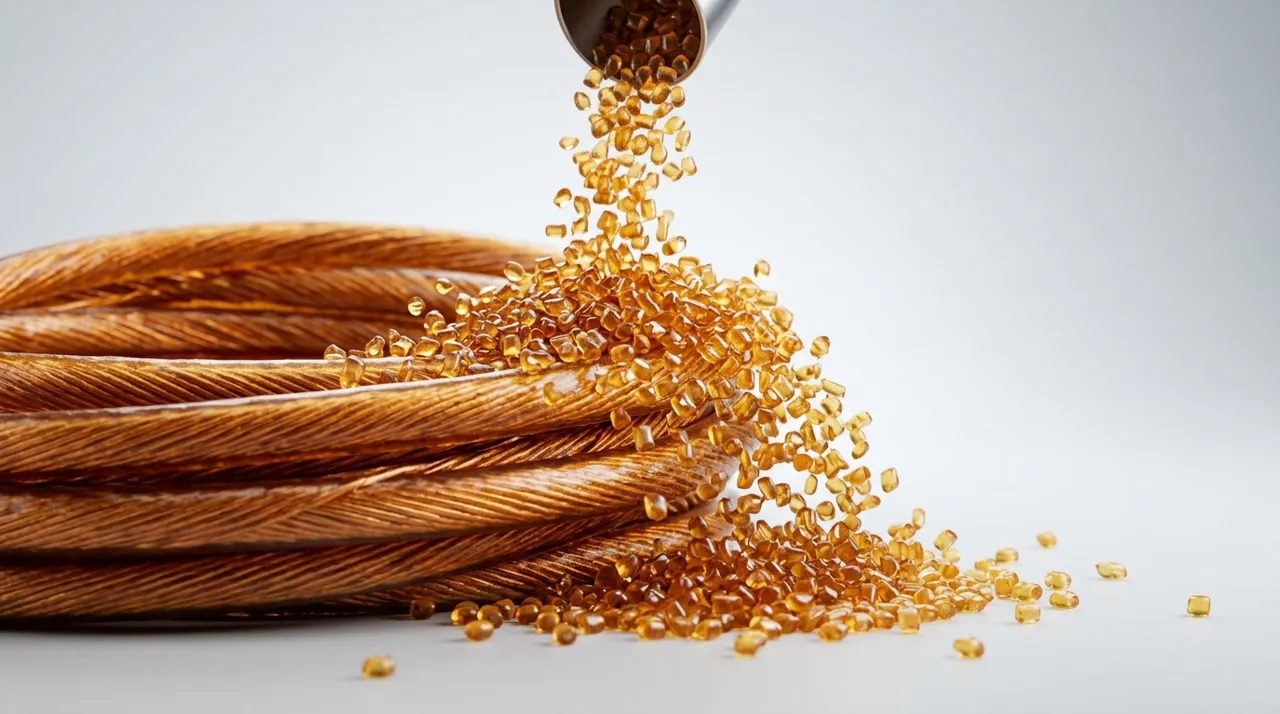
XLPE (cross-linked polyethylene) is a thermoset material created by chemically cross-linking polyethylene molecules — with superior heat and moisture resistance compared to the alternatives.
Performance: higher operating temperatures than PVC-insulated cables, extreme resistance to abrasion and wear, to high voltage, chemicals and hazardous materials. It performs equally well in extreme heat and cold.
Compared to PVC — which only covers low-tension applications — XLPE works for both low- and high-tension use, lasts longer, tolerates temperature better, contains no chlorides (kinder to the environment) and protects better against moisture.
Applications: power distribution, industrial installations, utility grids, mining, medical facilities, commercial and residential heating. Relative to the performance it delivers, XLPE remains an affordable option.
04
VDE symbols for aluminium cables
The VDE standard names cables with a letter code describing their construction — engineers can read the specification straight off the sheath.
N = cable built to the VDE standard; (N) = based on VDE standards. A = aluminium conductor.
Insulation: Y = PVC · 2Y = polyethylene · 2X = cross-linked polyethylene (XLPE). The outer sheath uses the same letters: Y (PVC) or 2Y (PE).
Additional components: C = concentric copper conductor · CW = wave-form variant · R = round-wire armour · B = steel-tape armour.
Example: NA2X2Y = a VDE cable (N) with aluminium conductor (A), XLPE insulation (2X) and polyethylene sheath (2Y).